Market Update
Vietnam's real competitive edge is talent, not cost
Summary
Vietnam is no longer just a low-cost labour market. In April 2026 the World Bank named it one of the top five performers on the Human Capital Index Plus (HCI+) among countries at a similar income level, with a score of 216 out of 325. For investors, the question is shifting from 'how cheap is labour?' to 'how quickly can we turn capable people into productive teams?'
Key takeaways
- HCI+ 2026: Vietnam 216/325, above Brunei (208), Thailand (202) and Malaysia (201), according to World Bank data reported by Vietnam Briefing.
- The index measures how health, education and work turn into future productivity, not only schooling.
- Capable people still need clear roles, structured onboarding and accurate payroll to perform.
- Workforce planning decides whether early hires can scale into a full operation.
What does the HCI+ score say about Vietnam's workforce?
The Human Capital Index Plus measures the human capital a child born today can expect to build through health, education and on-the-job learning. Vietnam's 216 is high for its income level: the World Bank highlights strong learning outcomes and above-average success in turning education and health spending into economic results. For employers, it signals a workforce that can take on more technical and higher-value work in manufacturing, engineering, logistics, digital services and finance.
Why potential does not turn into output on its own
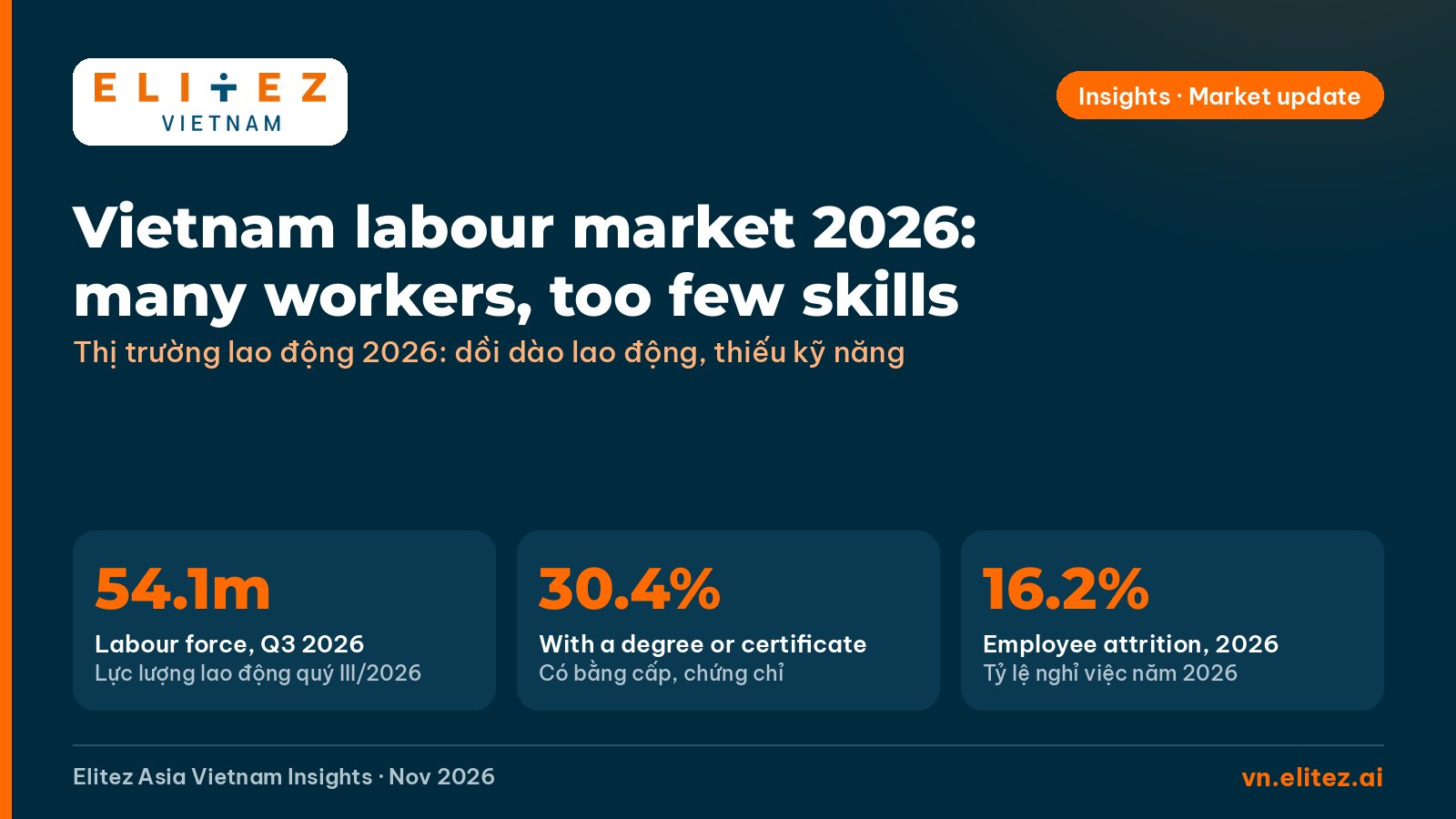
Only 30.4% of Vietnam's workers hold a degree or vocational certificate (NSO, Q3 2026), so experienced people are in demand and new hires often need structured support. Teams lose time when expectations are vague, contracts and insurance are late, or managers and staff work from different assumptions. Foreign companies feel this most, because local practice, culture and compliance differ from home.
What a good onboarding plan covers
- A clear labour contract and job description
- Payroll set-up and social insurance registration from the first month
- Reporting lines and decision rights
- Company policies and how to raise issues
- A training plan for the first 30, 60 and 90 days
- Regular check-ins with the line manager
Plan the workforce for the next stage, not only today's vacancies
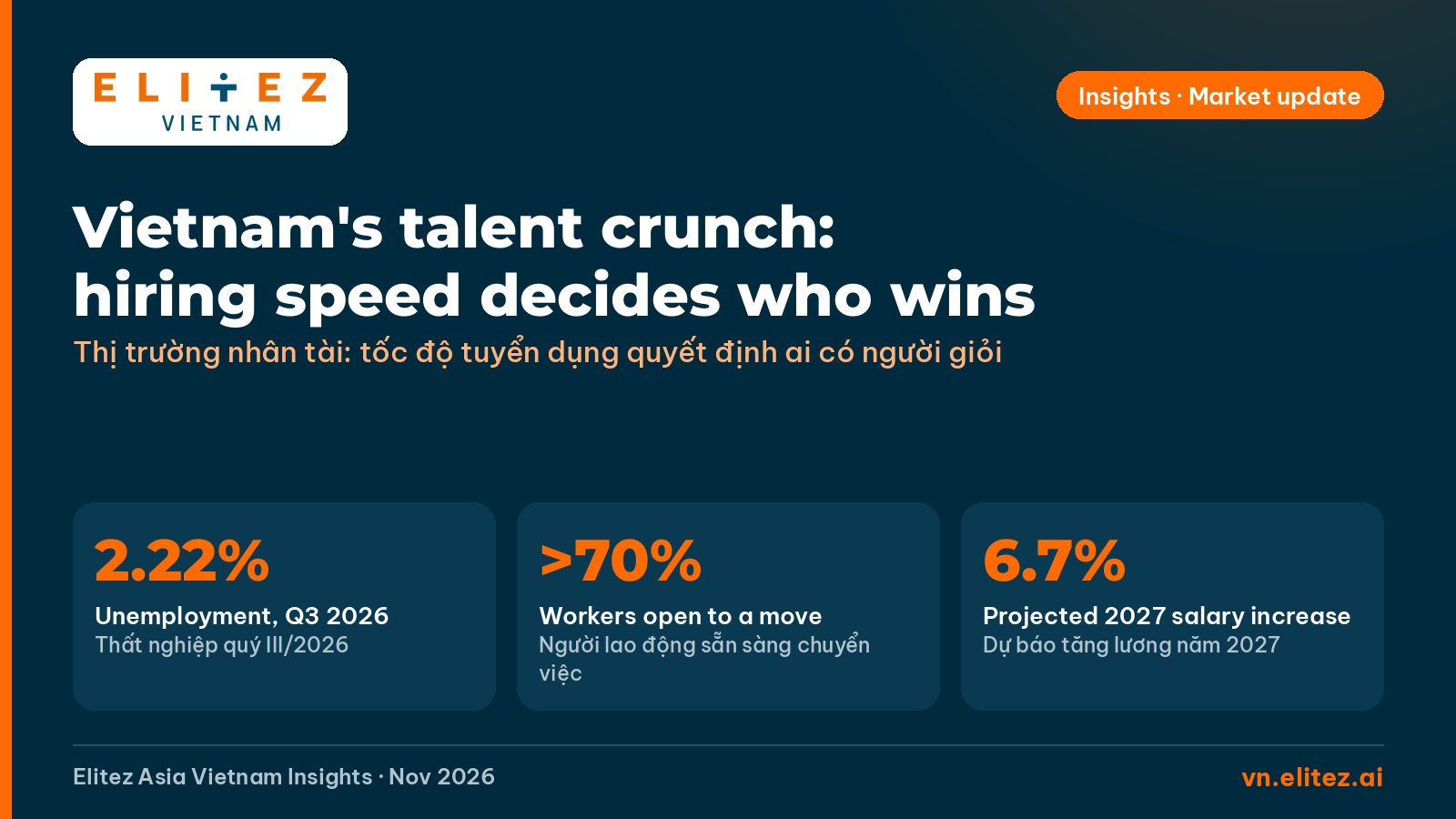
Most companies start in Vietnam with a few people and then add sales, operations, finance, HR and supervisors. Deciding early which roles are permanent, which can be contract or project staff, and how payroll and compliance will scale avoids rushed hiring and cost surprises later. With 2027 salary budgets projected at 6.7% (Aon), retention of key people also belongs in the plan.
Frequently asked questions
Is Vietnam still a low-cost labour market?
Labour costs remain competitive in the region, but wages are rising and skilled roles are priced by demand. The stronger case for investing is workforce quality and the speed at which teams become productive.
Which countries scored below Vietnam on HCI+ 2026?
Among ASEAN economies, Brunei (208), Thailand (202), Malaysia (201), the Philippines and Indonesia (175 each) scored below Vietnam's 216, despite most having higher incomes.
This article is general information, not legal advice. Check the original legal text before acting.