Market Update
Vietnam labour market 2026: plenty of workers, too few skills
Summary
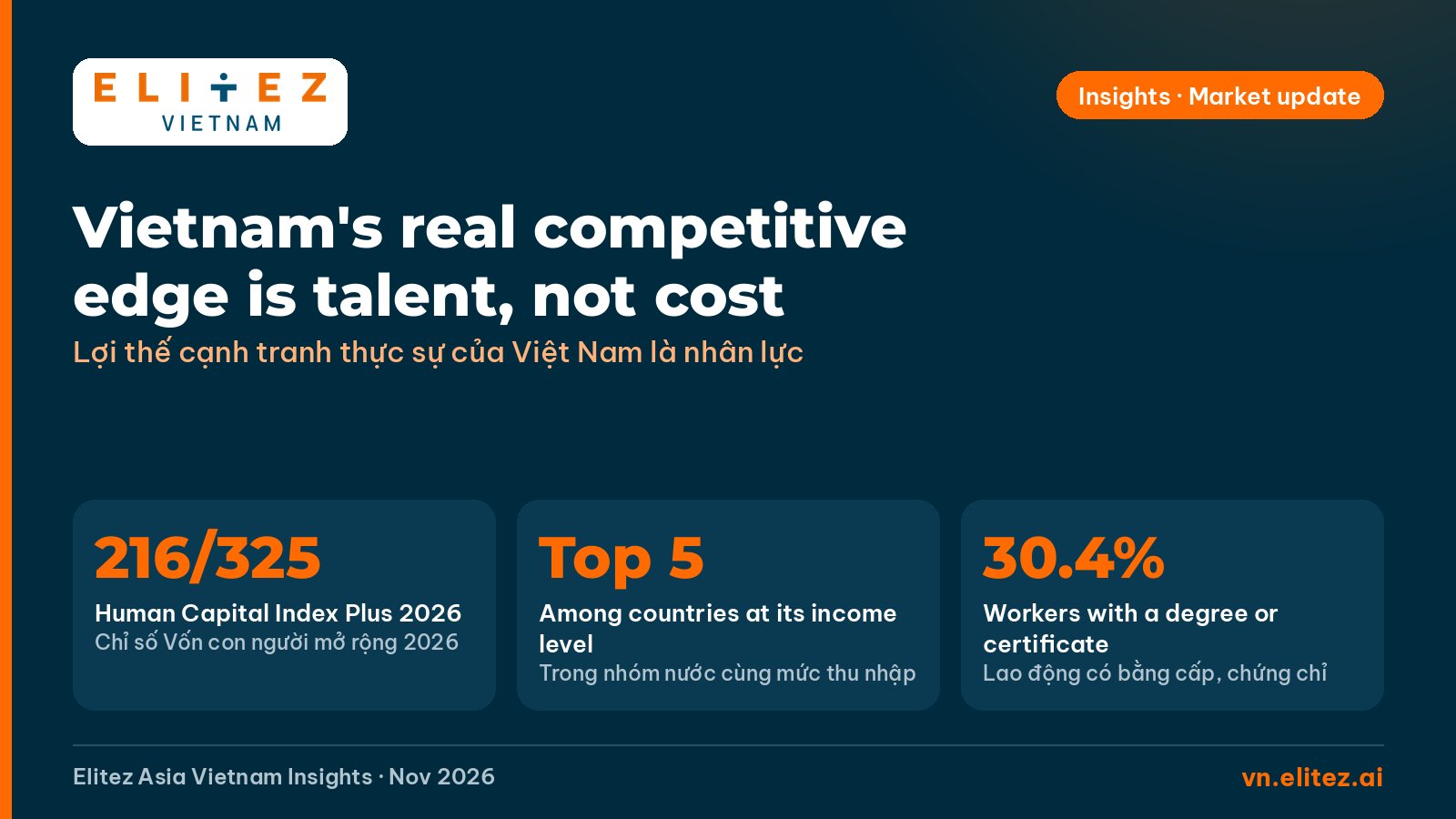
Vietnam is not short of workers; it is short of the right ones. The labour force reached 54.1 million in Q3 2026, yet only 30.4% of workers hold a degree or vocational certificate (NSO). For employers, the challenge has moved from filling vacancies to finding, paying and keeping people with the skills that foreign investment now demands.
Key takeaways
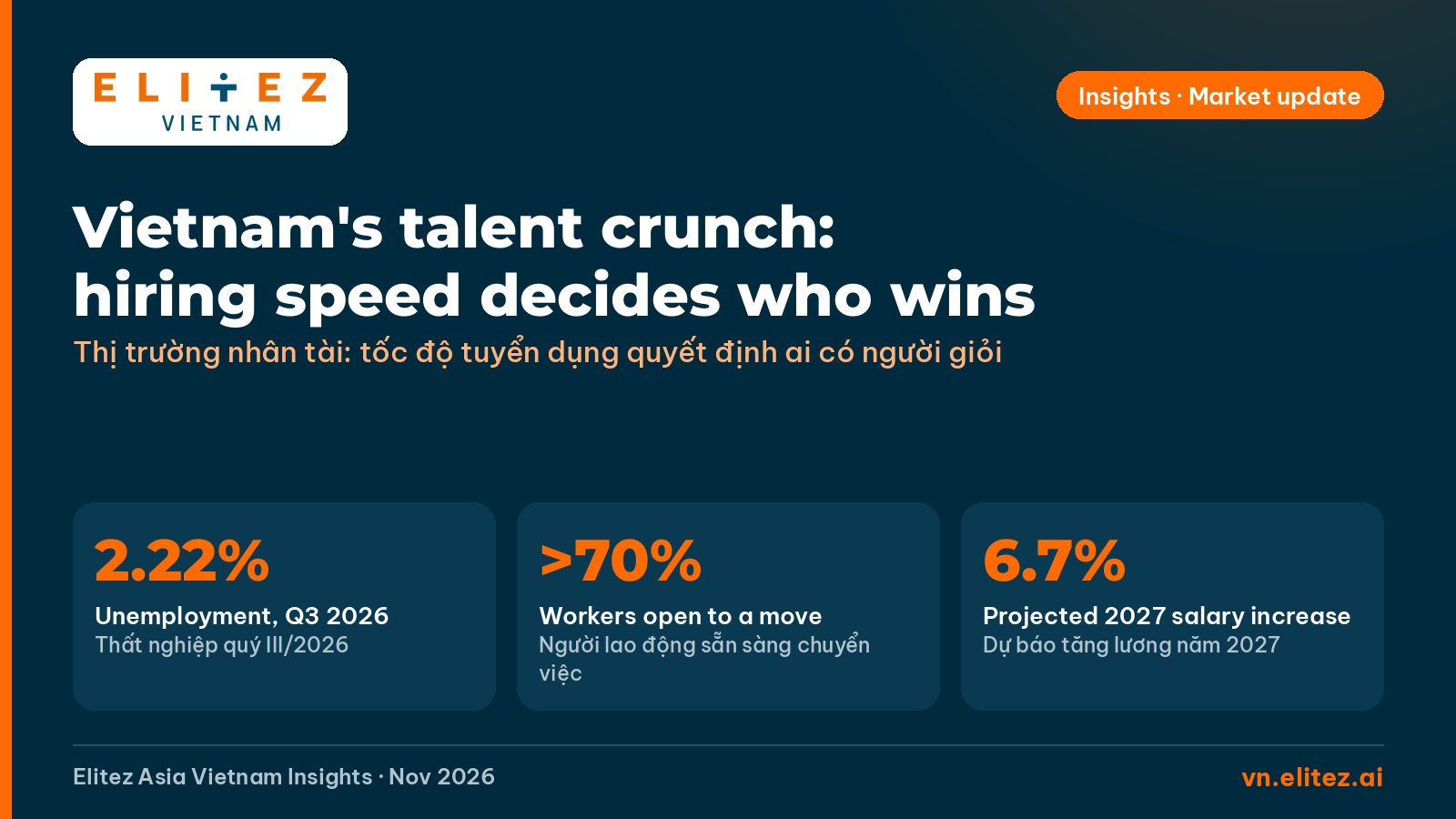
- 54.1 million workers, 2.22% unemployment, 30.4% with a recognised qualification (NSO, Q3 2026).
- FDI is shifting demand towards technical, engineering, automation and digital skills.
- Supply-chain exposure makes flexible staffing a business-continuity tool.
- With more than 70% of workers open to a move, retention matters as much as recruitment.
How big is the skills gap in Vietnam?
Large. Fewer than one in three workers has a recognised qualification, while youth unemployment stands at 9.07% (NSO, Q3 2026). In practice, employers see many applicants for general roles and very few for experienced technical, engineering, finance or digital positions. Expect longer hiring timelines and stronger salary competition for these roles.
How is foreign investment changing who employers need?
Registered FDI reached USD 54.85 billion in the first ten months of 2026, and 82.9% of disbursed FDI went into manufacturing (NSO). New plants increasingly need automation, semiconductor, quality, maintenance and supply-chain specialists rather than general labour, plus managers who speak Korean, Chinese or Japanese. That raises the bar for sourcing, salary benchmarking and workforce planning.
Why supply-chain exposure is now an HR issue
The ILO estimates that Vietnam has more than 20 million jobs linked to global supply chains, the largest number in Southeast Asia, and that most of them depend on demand from a handful of trading partners. When orders swing, headcount needs swing with them. Companies that can add or reduce contract staff quickly and compliantly protect both output and costs.
What employers should do in 2026 and 2027
- Map the talent pool and approach candidates directly for specialist roles.
- Benchmark pay: Aon projects 6.7% average salary increases in Vietnam for 2027.
- Use contract and project staffing for volume swings.
- Invest in onboarding and upskilling to grow skills internally.
- Review retention: career paths, manager quality and benefits, not only pay.
Retention is as important as recruitment
Vietnam Briefing reported that about 42% of workers are actively job-hunting and another 28.6% would move for the right offer, and Aon put employee attrition at 16.2% in 2026. In a skills-short market, losing a key engineer or supervisor costs more than hiring one. Watch resignation signals early and fix pay gaps before they become exits.
Frequently asked questions
What is the unemployment rate in Vietnam?
2.22% in Q3 2026, with youth unemployment (ages 15 to 24) at 9.07%, according to the National Statistics Office.
Which skills are most in demand in Vietnam?
Engineering, automation, semiconductors, quality and maintenance in manufacturing; supply chain; IT, data and AI; and bilingual managers for foreign-invested companies.
This article is general information, not legal advice. Check the original legal text before acting.