Market Update
Vietnam's talent crunch: why hiring speed decides who gets the best people
Summary
In Vietnam, unemployment stays near 2.2% and most skilled professionals are already employed. Many are open to a move, but they rarely wait. Employers who respond slowly, take weeks to approve an offer or leave the role vague lose strong candidates to faster competitors. In 2026, hiring speed and a professional process are as decisive as salary.
Key takeaways
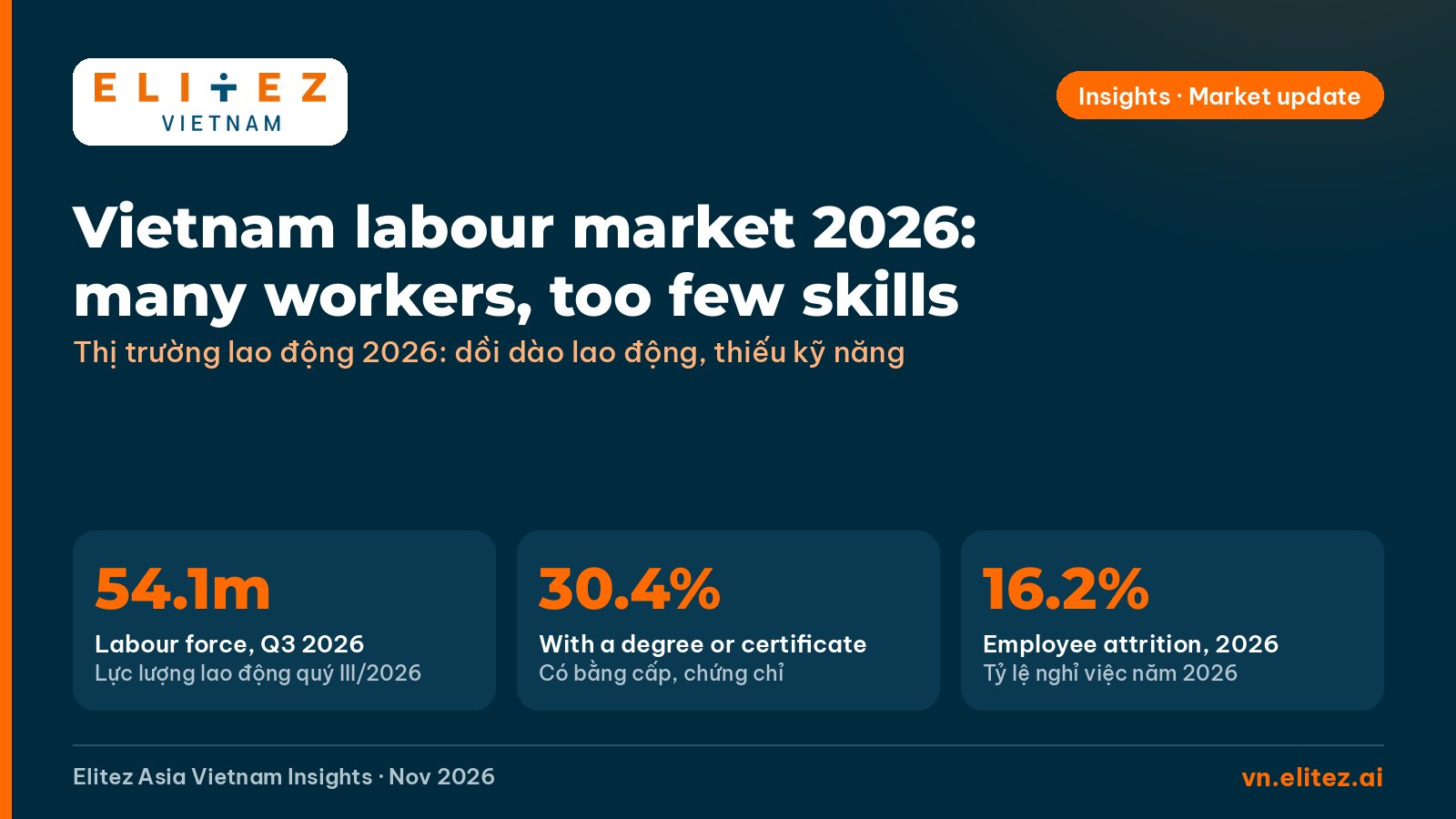
- The labour market is tight: unemployment was 2.22% in Q3 2026 (NSO).
- More than 70% of workers are actively looking or open to the right offer, according to Vietnam Briefing.
- Candidates judge role clarity, stability and onboarding, not only pay.
- Delays in approvals, contracts or onboarding often cost employers the candidates they wanted.
How tight is Vietnam's labour market in 2026?
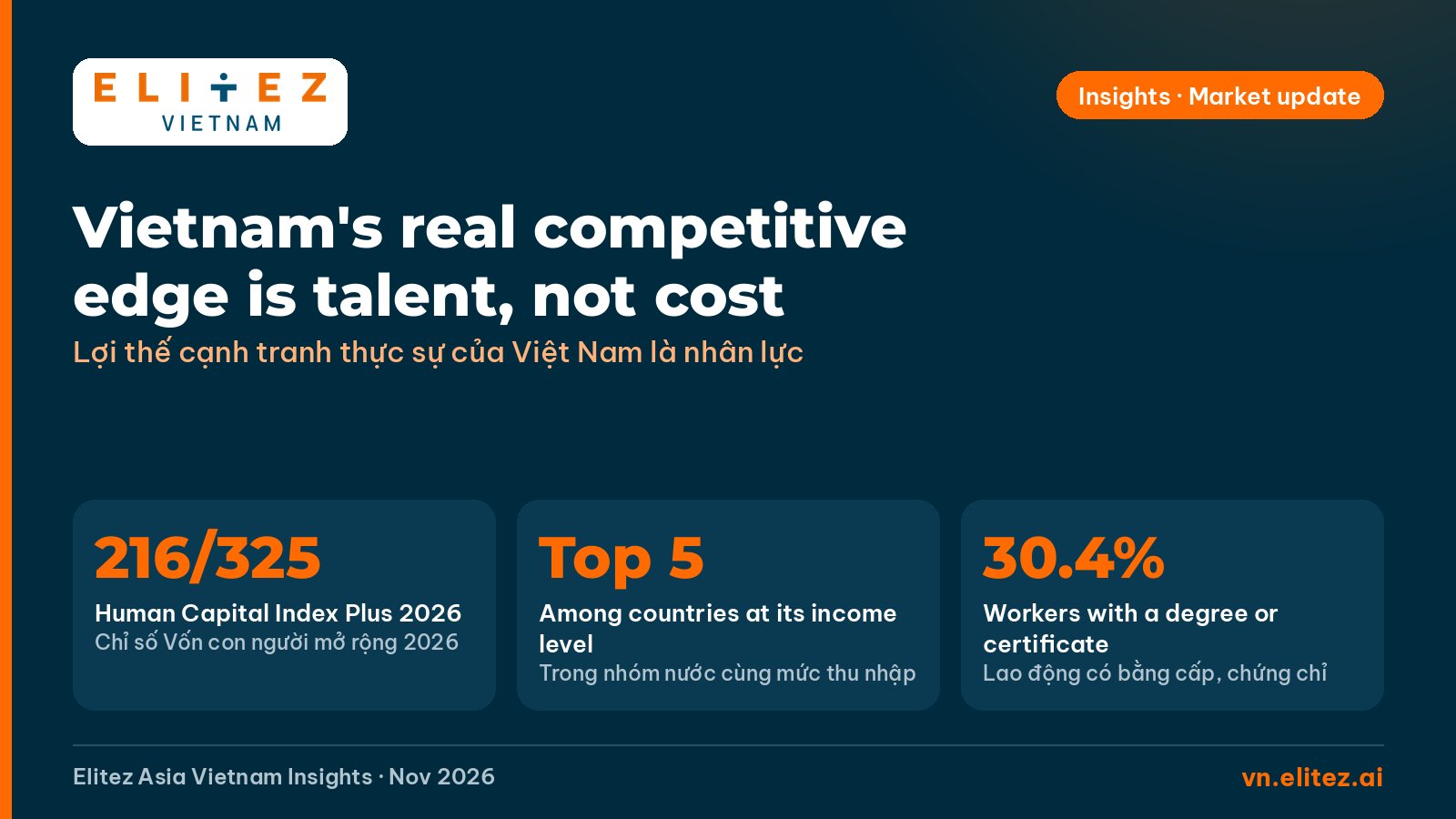
Very tight for skilled roles. The National Statistics Office reported unemployment of 2.22% in Q3 2026, while only 30.4% of workers hold a degree or vocational certificate. Vietnam Briefing reported that about 42% of employees are actively looking for a new job and another 28.6% would switch for the right opportunity. Put together: plenty of movement, few qualified people on the market at any one time.
Which roles are hardest to fill?
- Manufacturing, engineering and technical support
- Supply chain and logistics
- Sales and business development
- Finance and accounting
- IT, data and digital roles
- Supervisors and middle managers
For these roles, a job posting alone rarely reaches the right people. Talent mapping, direct approach and an up-to-date salary benchmark make the difference.
What do candidates look at besides salary?
Pay still matters, and with 2027 salary budgets in Vietnam projected at 6.7% by Aon, offers need to be realistic. But candidates also ask whether the job scope is clear, whether the company is stable and organised, whether onboarding will be smooth and whether there is room to grow. A foreign brand alone does not win the offer if the local process feels uncertain.
Six ways to hire faster without lowering the bar
- Agree the job scope, budget and approvers before the role goes live.
- Benchmark the salary range against the current market.
- Limit the process to two or three interview rounds with fixed feedback times.
- Prepare the contract template and approval route in advance.
- Make the offer within days of the final interview, not weeks.
- Have onboarding, payroll and insurance registration ready for day one.
Why HR execution matters for market entry
Foreign companies often find the right candidate and then lose them to slow internal steps: no local contract template, unclear benefits, payroll not set up. Compliant contracts, accurate payroll, statutory insurance and a structured first month are part of the hiring offer, not administration that can wait.
Frequently asked questions
How long does it take to hire a skilled professional in Vietnam?
With a clear brief and a fast decision process, many professional roles can be filled in four to eight weeks. Senior and niche roles take longer, and candidates usually have a 30 to 45-day notice period.
Is salary the main reason candidates decline offers?
Often, but not always. Slow decisions, an unclear role and weak communication during the process are common reasons too.
This article is general information, not legal advice. Check the original legal text before acting.